
Introduction: The Critical Need for Advanced EV Training for Engineers
The automotive sector is undergoing a rapid transformation with the global shift towards electric vehicles (EVs). Governments worldwide are pushing for the adoption of EVs to reduce carbon emissions, enhance energy security, and create a more sustainable transportation ecosystem. As a result, the demand for skilled engineers specializing in electric mobility has increased exponentially.
For highly educated engineers seeking to transition or specialize in the EV industry, acquiring advanced, industry-recognized training in EV systems, powertrains, battery management, and charging infrastructure is essential. With the burgeoning EV market, specialized courses offer not only technical mastery but also access to high-impact job opportunities within global automotive giants, startups, and emerging EV infrastructure companies.
This article highlights the top 10 electric vehicle course providers worldwide, offering advanced training in electric vehicle technology and career opportunities in the global EV ecosystem.
Why the EV Industry is Booming Globally
The rapid adoption of electric vehicles is driven by several global factors:
- Government Policies and Subsidies: Numerous countries, including those in Europe, North America, and Asia, are setting ambitious targets for EV adoption, backed by policies like tax incentives, purchase subsidies, and stricter emission standards.
- Technological Advancements: Breakthroughs in battery technology, fast-charging infrastructure, and electronic control systems are significantly enhancing the performance, affordability, and appeal of EVs.
- Environmental Necessity: As global environmental concerns grow, nations are prioritizing sustainable energy sources. EVs play a key role in reducing carbon emissions and reliance on fossil fuels.
- Automotive Industry Transformation: Major automotive manufacturers like Tesla, BMW, Volkswagen, and General Motors are investing heavily in EV R&D, creating a need for engineers skilled in the latest EV technologies.
The shift towards electrification has created an urgent need for skilled professionals who can drive innovation and efficiency in the EV space, particularly engineers with expertise in battery systems, electric drivetrains, and charging infrastructure.
The Skills Gap in the EV Industry
The global EV market is expected to reach over $800 billion by 2027, creating a significant demand for engineers with specialized knowledge in areas such as powertrains, battery management systems (BMS), energy storage, and vehicle-to-grid technologies. Despite this growth, a substantial skills gap exists due to the lack of formal education and practical training in these advanced EV technologies.
This gap presents an excellent opportunity for highly educated engineers to gain cutting-edge skills that will place them at the forefront of the electric mobility revolution. Whether transitioning from a conventional automotive background or advancing within the EV field, specialized training is crucial for securing high-paying roles in R&D, vehicle design, system integration, and EV infrastructure development.
Criteria for Selecting the Best EV Course Providers
When choosing an EV course, especially for advanced engineers, several factors must be considered to ensure the training aligns with career goals:
1. Accreditation and Industry Recognition
Look for training providers accredited by reputable institutions, such as IITs, universities, or recognized industry bodies like SAE International. Certification from well-established entities ensures that the course content is industry-relevant and meets global standards.
2. Specialized Technical Training
Highly educated engineers should seek courses that provide in-depth knowledge of EV technologies such as electric powertrains, energy storage systems, battery management, charging infrastructure, and vehicle systems integration. Hands-on laboratory training and access to real EV components are crucial for mastering these technologies.
3. Career Placement Assistance
The best courses offer not just theoretical and technical training but also provide strong industry connections and job placement assistance. Look for courses with direct partnerships with leading OEMs (Original Equipment Manufacturers), EV startups, and charging infrastructure companies.
4. Research and Development Opportunities
For engineers with a research-oriented mindset, it’s essential to choose programs that provide access to R&D environments. Training in high-performance computing, battery chemistry, and electrification research will position engineers for roles in cutting-edge innovation labs.
Top 10 EV Course Providers Worldwide
1. University of Michigan – Electric Vehicle Center (EVC), USA
Overview:
The Electric Vehicle Center (EVC) at the University of Michigan is a premier research and educational institution focused on advancing EV technology. EVC provides highly specialized research-based training for engineers, particularly in areas like powertrain design, battery technology, and charging systems.
Key Offerings:
- Courses: Advanced EV engineering, energy storage, power electronics, charging infrastructure.
- Duration: 6–12 months for certificate programs.
- Mode: Hybrid (online + in-person).
- Industry Tie-Ups: Partnerships with major automotive companies (e.g., Ford, General Motors) for research and practical exposure.
Ideal For: Engineers looking to gain advanced research skills in EV systems and participate in industry-driven R&D.
2. eMobility.Academy by DIYguru, India
Overview:
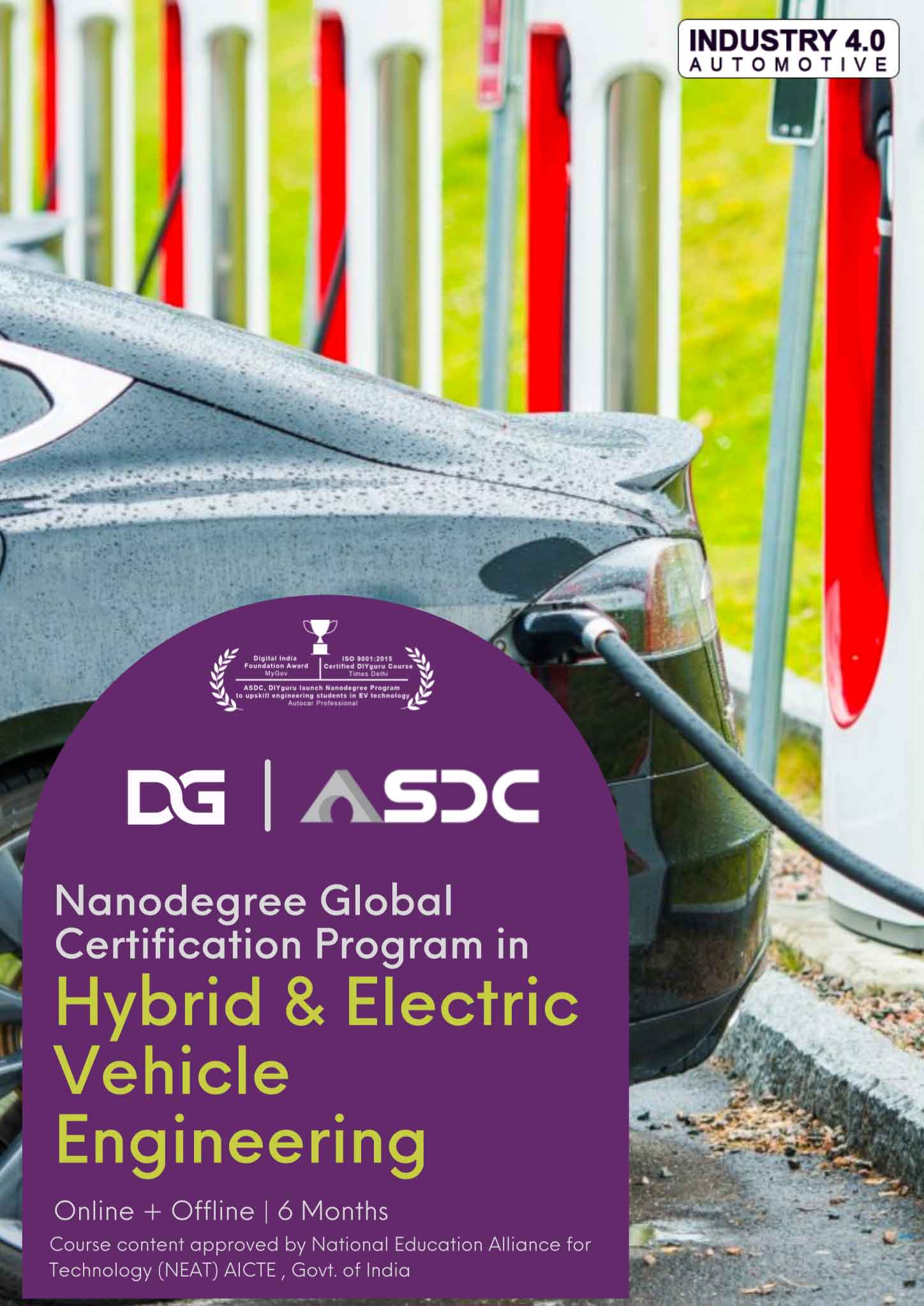
eMobility.Academy by DIYguru is recognized for its cutting-edge training in electric vehicle technology. It offers specialized courses for engineers, covering electric vehicle powertrains, battery management systems (BMS), and charging infrastructure. DIYguru provides AICTE-approved certification and access to hands-on labs with real EV components.
Key Offerings:
- Courses: EV Technician Certification, Powertrain Design, Battery Management Systems (BMS), Charging Infrastructure, and Entrepreneur Programs.
- Duration: 3–12 months.
- Mode: Online + Offline (Hybrid).
- Industry Tie-Ups: Collaborations with global leaders such as Hyundai, Tata, Bosch, and L&T.
- Placement Support: Access to emobility.careers for job placement.
Ideal For: Engineers seeking comprehensive EV training with practical lab experience and placement support.
3. Tata Technologies – EV Online Certification Courses, India
Overview:
Tata Technologies offers specialized online certification courses in EV technologies, focusing on battery systems, powertrain technologies, and charging infrastructure. With its close ties to global automotive OEMs, Tata Technologies provides hands-on training and cutting-edge insights into the EV sector.
Key Offerings:
- Courses: EV Essentials, Energy Storage Systems, Battery Pack Design.
- Duration: 4–6 weeks per course.
- Mode: Online.
- Industry Tie-Ups: Partnerships with leading automotive manufacturers for real-world applications.
Ideal For: Engineers who want to specialize in battery technologies, energy storage, and vehicle electrification.
4. SAE International – Hybrid and Electric Vehicle Engineering Academy, USA
Overview:
SAE International provides one of the most comprehensive training programs for engineers in the hybrid and electric vehicle sectors. The program covers advanced powertrain technologies, vehicle dynamics, and system integration for electric vehicles.
Key Offerings:
- Courses: HEV/PHEV/EV engineering concepts, vehicle dynamics, and system integration.
- Duration: 6–12 months (self-paced).
- Mode: Online.
- Accreditation: SAE International certification.
- Industry Tie-Ups: Partnerships with OEMs and leading automotive suppliers.
Ideal For: Engineers aiming to deepen their expertise in hybrid and electric vehicle technologies and system integration.
5. George Brown College – EV Technician Program, Canada
Overview:
George Brown College offers a 32-week Electric Vehicle Technician certificate program for engineers and technicians aiming to specialize in EV systems. The program integrates theory with hands-on training, providing engineers with practical, real-world knowledge of EV components and diagnostics.
Key Offerings:
- Courses: EV systems, diagnostics, and repair.
- Duration: 32 weeks.
- Mode: Online (distance learning).
- Industry Tie-Ups: Collaborations with major EV manufacturers for practical experience.
Ideal For: Engineers looking for comprehensive technician training in EV systems and vehicle diagnostics.
6. Legacy EV – EV Fundamentals Bootcamp, USA
Overview:
Legacy EV provides an immersive EV fundamentals bootcamp, emphasizing practical skills and safety protocols required for handling high-voltage EV systems.
Key Offerings:
- Courses: EV fundamentals, powertrain systems, high-voltage safety, and troubleshooting.
- Duration: 25 hours (intensive bootcamp).
- Mode: In-person.
- Accreditation: Legacy EV certification.
Ideal For: Engineers seeking hands-on exposure to high-voltage EV systems with an emphasis on safety and technical troubleshooting.
7. CARILEC – EV Training Programs, Caribbean
Overview:
CARILEC offers specialized EV training programs for automotive technicians, focusing on high-voltage safety and EV system diagnostics.
Key Offerings:
- Courses: High-voltage safety, EV diagnostics, and repair.
- Duration: 2–3 days per module.
- Mode: In-person.
- Accreditation: CARILEC certification.
Ideal For: Automotive engineers in the Caribbean seeking specialized EV safety and diagnostic training.
8. ETUT – European Training Network for Electrical Transport, Europe
Overview:
ETUT focuses on research-based training for engineers in power electronics, energy storage systems, and electromagnetic compatibility for EV technologies. This is ideal for engineers aiming to work in advanced R&D roles.
Key Offerings:
- Courses: Power electronics, electromagnetic compatibility, and energy storage systems.
- Duration: 3–4 years (doctoral research).
- Mode: Research-based.
- Industry Tie-Ups: Collaborations with industrial partners in EV technology.
Ideal For: Engineers aiming to engage in advanced research and innovations in EV technology.
9. Nova Anglia College – Bachelor of Technology (Electric Vehicle), Australia
Overview:
Nova Anglia College offers a Bachelor of Technology program specializing in electric vehicle engineering, combining engineering principles with vocational training in electric vehicle technologies.
Key Offerings:
- Courses: Electric vehicle design, battery systems, charging infrastructure.
- Duration: 3 years.
- Mode: On-campus.
- Accreditation: TEQSA, CRICOS.
Ideal For: Engineers looking to transition to the EV sector or undergraduate students seeking a specialized EV engineering degree.
10. National Alternative Fuels Training Consortium (NAFTC), USA
Overview:
NAFTC provides training in alternative fuels, including electric vehicles, to promote energy independence and improve air quality.
Key Offerings:
- Courses: EV fundamentals, hybrid vehicle technology, and alternative fuels.
- Duration: 1–2 days per module.
- Mode: Online and in-person.
- Accreditation: NAFTC certification.
Ideal For: Educators and professionals seeking a foundational understanding of alternative fuels and electric vehicle technologies.
Comparison Table:
| Provider | Programs Offered | Duration | Mode | Accreditation | Industry Tie-Ups |
|---|---|---|---|---|---|
| University of Michigan – EVC | Advanced EV engineering, battery systems, power electronics | 6–12 months | Hybrid | University of Michigan | Ford, GM, R&D partnerships |
| eMobility.Academy by DIYguru | EV Technician, Powertrain, BMS, Charging | 3–12 months | Online + Offline | AICTE, NITI Aayog, IIT tie-ups | Hyundai, Tata, Bosch |
| Tata Technologies | EV Essentials, Battery Pack Design | 4–6 weeks | Online | Tata Technologies | Automotive OEMs |
| Legacy EV | EV fundamentals, powertrain systems | 25 hours | In-person | Legacy EV | EV manufacturers |
| SAE International | HEV/PHEV/EV engineering concepts | 6–12 months | Online | SAE International | Automotive industry leaders |
| George Brown College | EV systems, diagnostics, repair | 32 weeks | Online | George Brown College | EV manufacturers |
| CARILEC | High-voltage safety, diagnostics | 2–3 days | In-person | CARILEC | Regional automotive service providers |
| ETUT | Power electronics, energy storage systems | 3–4 years | Research-based | Horizon 2020 | Industrial partners |
| Nova Anglia College | EV design, battery systems | 3 years | On-campus | TEQSA, CRICOS | Automotive companies |
| NAFTC | EV fundamentals, hybrid vehicle technology | 1–2 days | Online + In-person | NAFTC | Educational institutions, government agencies |
Conclusion: Choosing the Right EV Course for Your Career
As the EV industry rapidly grows, highly educated engineers are uniquely positioned to capitalize on new opportunities. Selecting the right course depends on your career goals, whether you’re aiming for technical expertise in powertrain systems, engaging in cutting-edge research, or pursuing high-level roles in EV infrastructure.
For advanced engineers, courses from University of Michigan – EVC and eMobility.Academy by DIYguru offer comprehensive training with a focus on both technical skills and job placement opportunities. Similarly, programs like SAE International and George Brown College offer advanced training for engineers aiming to specialize in hybrid and electric vehicle technologies.
By selecting the right EV course, engineers can enhance their skills, expand their professional networks, and accelerate their careers in the fast-growing electric mobility sector.


Why Choose DIY Course
 Course work & interactions are 100% online.
Study at the time and place that suits you.
24/7 access to course material.
Learn from world-class experts in their field.


0 responses on "Top 10 Electric Vehicle Course Providers Worldwide (2025)"