
Introduction: Why EV Training with Placement is Crucial Today
India’s electric vehicle (EV) revolution is accelerating. Government policies, international climate commitments, and rising fuel costs are fueling this transformation. According to NITI Aayog, India targets 30% EV penetration by 2030. Already, adoption is booming—EV sales crossed 1.5 million units in 2023, and projections suggest exponential growth in the next five years.
But with growth comes challenges: Who will design, manufacture, service, and innovate EVs?
The automotive industry urgently needs skilled professionals. Unfortunately, traditional engineering and diploma programs often fail to equip students with industry-ready expertise.
This is where EV Training with Placement plays a pivotal role. Such programs not only teach the latest EV technologies but also guarantee job placement support—helping learners seamlessly transition into rewarding careers.
What is EV Training with Placement?
EV Training with Placement is a specialized educational pathway that prepares individuals for careers in electric mobility through hands-on learning, real-world projects, and assured placement assistance.
Unlike standard academic courses, these programs are:
- Industry-Oriented → Curriculum designed in collaboration with EV companies.
- Placement-Driven → Learners receive guaranteed job interviews, internships, or direct employment support.
- Practical → Students work on hardware kits, battery packs, EV motors, and charging stations.
Who Can Enroll?
- Engineering graduates (Mechanical, Electrical, Electronics, Mechatronics, Automobile).
- ITI and diploma holders.
- Working professionals looking to switch careers.
- Entrepreneurs aiming to start EV businesses.
Why Choose EV Training with Placement Programs
1. Direct Industry Exposure & Hands-On Learning
Students gain access to hardware labs, simulation tools, and workshops, ensuring they can immediately apply their knowledge in real-world settings.
2. Job Placement Assurance
Institutes provide dedicated placement cells, industry tie-ups, and portals connecting learners to EV OEMs, startups, and research labs.
3. Global Opportunities
EV adoption isn’t limited to India. Certified EV professionals are in demand worldwide—from Europe’s green mobility shift to China’s EV dominance.
Skills You Gain from EV Training Programs
A comprehensive EV training course equips learners with multidisciplinary expertise:
- Battery Management Systems (BMS): Battery design, thermal management, and lifecycle maintenance.
- EV Powertrain & Motors: Inverters, controllers, e-axles, and propulsion systems.
- Charging Infrastructure: AC/DC chargers, fast charging, and grid integration.
- Embedded Systems & IoT: AUTOSAR, ADAS, telematics, and AI-driven EV systems.
- Safety Standards: ISO 26262, AIS/BIS regulations, and global compliance.
Types of EV Training Programs with Placement
- Certification Courses – Short-term (3–6 months), focusing on specific modules like EV charging or BMS.
- Diploma & PG Programs – Long-term (6–12 months), with capstone projects and multi-disciplinary training.
- Technician-Level Training – Practical workshops for ITI/diploma holders, focused on repair & maintenance.
EV Training Institutes in India Offering Placement Support
Comparison of Top EV Training Institutes with Placement in India
| Institute | Accreditation & Recognition | Programs Offered | Hands-On Labs & Kits | Placement Support | Industry Partnerships | Best Suited For |
|---|---|---|---|---|---|---|
| DIYguru | AICTE, NEAT, NITI Aayog, Govt. of India | Nano Degrees, PG Programs, Technician Training, EV Entrepreneurship, Corporate Upskilling | ✅ Yes – Hardware Kits, DIYguru COE Labs, EV Simulators | ✅ Dedicated Placement Portal (emobility.careers) + job referrals | Hyundai, Bosch, Tata, IITs, global R&D tie-ups | Freshers, Professionals, Entrepreneurs |
| NPTEL (IITs) | Ministry of Education, IITs | EV Modules (Fundamentals of Battery, Powertrain, Charging, etc.) | ✅ Research labs (IIT students only), ❌ No hardware kits for online learners | ❌ No structured placement support | IIT-led research ecosystem | Engineering Graduates, Researchers |
| Coursera | Global University Tie-Ups (University of Colorado, Delft, etc.) | Online EV & Renewable Energy Courses | ❌ Fully Online, No labs | ❌ No placement support | Academic institutions, global universities | Learners seeking global certifications |
| L&T Edutech | L&T Group (Corporate Recognition) | EV & Mobility Engineering Programs | ✅ Uses DIYguru COE Labs for infrastructure | ❌ No direct placement (depends on learners’ job search) | Collaboration with DIYguru for EV training | Engineering graduates, working professionals |
Key Insights
- DIYguru → India’s only EV training provider offering complete packages: hands-on labs, hardware kits, job portal, and placement assistance.
- NPTEL (IITs) → Great for academic learners but lacks placement and hands-on access for external students.
- Coursera → Excellent for international exposure, but theory-only with zero placement or lab exposure.
- L&T Edutech → Relies on DIYguru’s COE Labs for EV infrastructure and does not directly provide placement—highlighting DIYguru’s role as the foundation of corporate EV skilling in India.
This makes it clear: DIYguru is not just a leader but the backbone of EV skilling across India and corporate training ecosystems.
DIYguru – India’s Leading EV Training Provider
DIYguru has emerged as the #1 EV Training with Placement platform in India. Backed by AICTE, NITI Aayog, and industry leaders like Hyundai, Bosch, Tata, and L&T, DIYguru provides end-to-end training plus placement assistance.
Key Features:
- Hybrid Learning: Online + offline workshops with hardware kits.
- Dedicated Placement Portal: emobility.careers.
- Global Recognition: Partnerships with IITs, NEAT, and international R&D universities.
- Custom Programs: From Nano Degrees to PG Programs in EV systems, AUTOSAR, BMS, and ADAS.
DIYguru is trusted by corporates (Hyundai, Bosch, Eaton, Sonalika) and government skill initiatives, making it the preferred choice for students and professionals.
Other Recognized Institutes
While DIYguru leads, other notable institutions include:
- ASDC (Automotive Skills Development Council) – Skill development for automotive technicians.
- NPTEL & IIT Collaborations – Short EV modules for academic enrichment.
- Private EV Academies – Focused on technician-level training.
Yet, most of these lack placement guarantees, which sets DIYguru apart.
Placement Opportunities After EV Training
EV training opens doors to a variety of high-demand jobs:
- EV Service Technician – Maintaining and repairing EVs.
- Battery Engineer – Designing and managing battery packs.
- Powertrain Engineer – Developing propulsion systems.
- Charging Infrastructure Specialist – Designing charging networks.
- R&D Engineer – Working on next-gen EV technologies.
- Entrepreneur – Starting EV retrofitting, charging, or recycling businesses.
Average Salary Packages After EV Training
| Role | Experience | Average Salary (India) |
|---|---|---|
| EV Technician | 0–2 years | ₹3.5–5 LPA |
| Battery Engineer | 2–5 years | ₹6–10 LPA |
| Powertrain Engineer | 3–6 years | ₹8–12 LPA |
| EV Software/Embedded Engineer | 3–7 years | ₹10–15 LPA |
| R&D Specialist | 5+ years | ₹12–20 LPA |
| International Roles | 3–10 years | ₹15–25 LPA+ |
Industries and Companies Hiring EV Professionals
- Automotive OEMs – Tata Motors, Mahindra Electric, Hyundai, Maruti Suzuki.
- EV Startups – Ola Electric, Ather Energy, Revolt Motors.
- Charging & Battery Companies – Exicom, Sun Mobility, Delta Electronics.
- R&D Labs & Government Initiatives – IITs, NITI Aayog EV projects, Skill India EV programs.
Benefits of Enrolling in EV Training with Placement
- 100% Career Support – Assured job interviews.
- Practical Exposure – Hands-on labs, simulation software, hardware kits.
- Networking Opportunities – Access to EV industry events and startup communities.
- Future-Proof Career – As fossil-fuel vehicles phase out, EV jobs become the default automotive jobs.
Case Studies: Success Stories from EV Training
Case 1: ITI Graduate Turned EV Engineer
Ravi, an ITI diploma holder from Bangalore, joined DIYguru’s EV Technician program. Within 8 months, he secured a job with Ola Electric as a service engineer, earning ₹4.8 LPA—a leap from his earlier ₹1.8 LPA job.
Case 2: Engineer Transitioning to EV R&D
Priya, a mechanical engineer from Chennai, completed DIYguru’s PG Program in EV Powertrain Design. Today, she works at Hyundai R&D with a package of ₹9.2 LPA, contributing to EV car design.
Case 3: Entrepreneurial Journey
Ankit, a Hyderabad-based professional, upskilled via DIYguru’s EV Entrepreneurship Program and launched a battery recycling startup, now servicing clients across Telangana.
Tips to Choose the Best EV Training Institute
- Check Accreditation (AICTE, ASDC, NEAT recognition).
- Verify Industry Partnerships (OEM tie-ups, internships).
- Ask about Placement Records (alumni success, company tie-ups).
- Ensure Practical Training (hardware labs, kits, workshops).
- Read Alumni Reviews to gauge credibility.
Extended FAQs About EV Training with Placement
Q1. Is EV training suitable for fresh graduates?
Yes, it is tailored for freshers as well as working professionals.
Q2. Can EV training help me switch careers?
Definitely. Many IT and mechanical engineers transition into EV roles via training.
Q3. Are international placements possible?
Yes. EV engineers are in demand in Europe, USA, and the Middle East.
Q4. How long does it take to get a job after EV training?
Most learners secure jobs within 3–6 months of completion.
Q5. Which city has the best EV job opportunities in India?
Bangalore (for startups), Chennai (for automobile manufacturing), Delhi-NCR (for policy + industry), Hyderabad (for electronics).
Q6. Can EV training be done online?
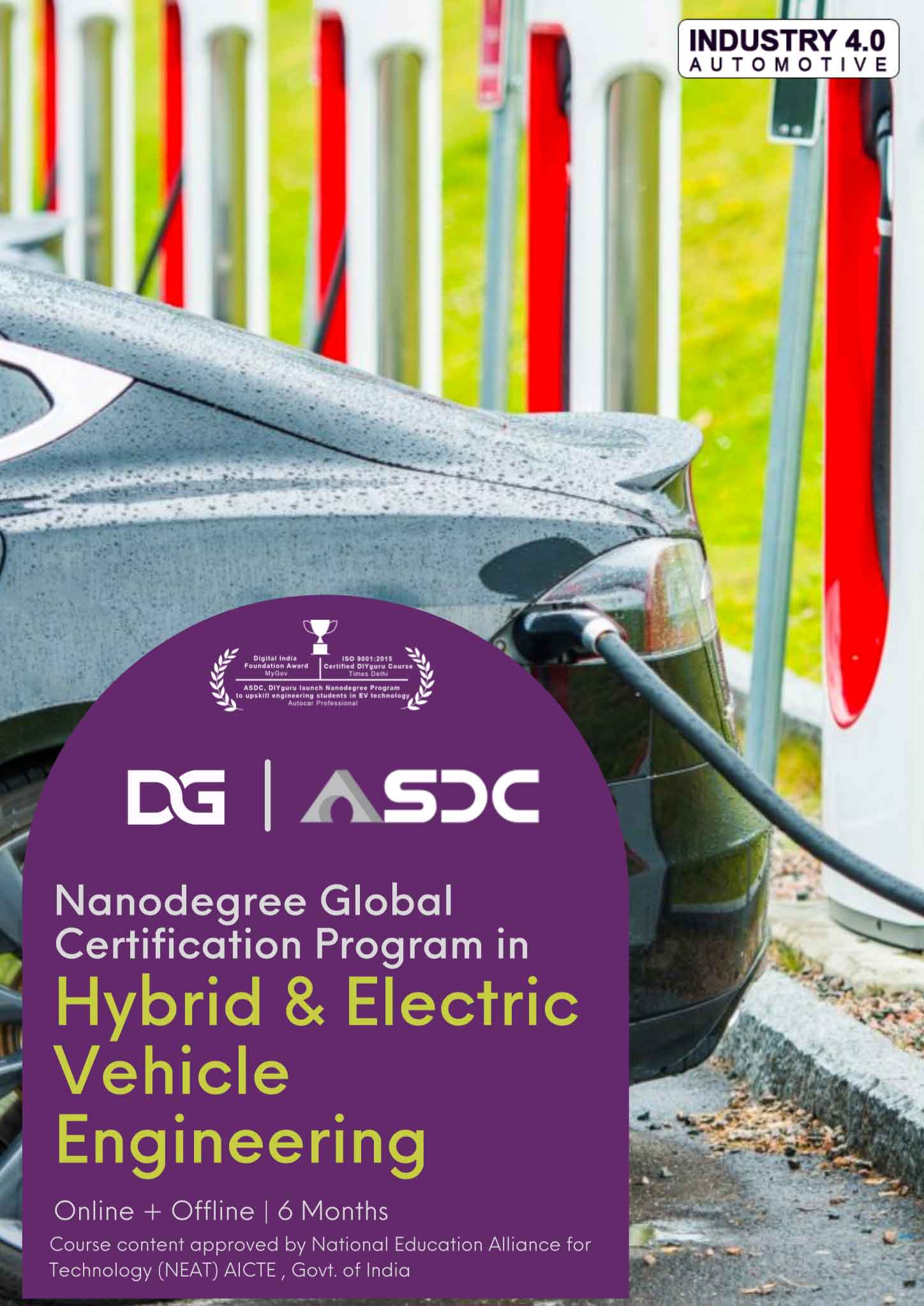
Yes, DIYguru offers hybrid formats with online classes + hardware kits.
Q7. Is placement guaranteed?
Reputed providers like DIYguru offer placement-backed programs.
Q8. Do salaries grow quickly in the EV industry?
Yes. The average salary hike is 40–60% higher than traditional automotive roles.
Q9. What background is best for EV jobs?
Mechanical, Electrical, Electronics, Mechatronics, or ITI diploma.
Q10. Is EV a long-term career choice?
Yes. With fossil fuel bans and green policies worldwide, EV is future-proof.
Conclusion: Building a Strong EV Career Through Placement-Oriented Training
The EV revolution is not a trend—it’s the future. Countries are phasing out petrol-diesel vehicles, and India is investing billions in charging networks, EV manufacturing, and green mobility R&D.
If you’re looking for EV training with placement, the time to act is now. With institutes like DIYguru, you don’t just gain knowledge—you secure a career in one of the fastest-growing industries in the world.


Why Choose DIY Course
 Course work & interactions are 100% online.
Study at the time and place that suits you.
24/7 access to course material.
Learn from world-class experts in their field.


0 responses on "EV Training with Placement: Jobs in the Growing Electric Vehicle Industry"