A multi-level inverter is a power electronic device that is used to generate a high-quality output voltage waveform with reduced harmonic distortion. It achieves this by synthesizing a stepped waveform that approximates a sinusoidal waveform. Multi-level inverters are capable of producing several voltage levels at the output, allowing them to generate high-quality waveforms with reduced harmonic distortion compared to traditional two-level inverters. The number of levels in a multi-level inverter can range from three to dozens or even hundreds, depending on the application.
Multi-level inverters have several advantages over traditional two-level inverters, including reduced harmonic distortion, lower electromagnetic interference, and higher efficiency. They are widely used in various applications, including renewable energy systems, motor drives, and power distribution systems. However, multi-level inverters also have some disadvantages, including increased complexity, higher cost, and more significant losses due to the increased number of switching devices.
Overall, multi-level inverters are an important development in power electronics and have significant potential for various applications. They offer improved waveform quality, reduced harmonic distortion, and increased efficiency compared to traditional two-level inverters, making them an attractive choice for many applications.
Regenerate response

Induction motors are widely used in various industrial applications due to their robustness, reliability, and efficiency. This project aims to design and analyze an induction motor for industrial applications with a focus on performance optimization and energy efficiency.
The project starts with a comprehensive review of the existing literature on induction motors, including their operating principles, design considerations, and performance characteristics. Based on the literature review, a design methodology is proposed, which includes the selection of motor parameters such as stator winding configuration, rotor design, and core material.
The design process involves mathematical calculations and simulation using computer-aided design (CAD) tools to optimize the motor performance parameters, such as torque, power factor, and efficiency, while considering practical constraints such as size, weight, and cost. Finite element analysis (FEA) is used to validate the design and optimize the motor’s electromagnetic performance, including the distribution of magnetic flux, eddy current losses, and thermal characteristics.
Once the motor design is finalized, a prototype motor is manufactured and tested in a laboratory setup. Experimental measurements are performed to validate the motor’s performance against the design specifications, including efficiency, torque-speed characteristics, and temperature rise. The results are compared with the simulation and analytical calculations to verify the accuracy of the design methodology.
The findings of this project are expected to contribute to the development of high-performance and energy-efficient induction motors for industrial applications. The optimized motor design and analysis techniques can be used in various industries, including manufacturing, transportation, and renewable energy systems, to improve motor performance, reduce energy consumption, and minimize environmental impact.
Keywords: Induction motor, design, analysis, performance optimization, energy efficiency, finite element analysis, prototype testing.
Read more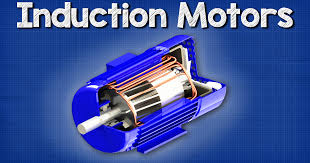
This Simulink model will calculate the vehicle speed based on the motor torque input. The model takes into account the vehicle’s mass, aerodynamic drag, rolling resistance, and gear ratio to calculate the vehicle’s speed. The input to the model is the torque generated by the motor, and the output is the vehicle speed in km/h.
This Simulink model will calculate the vehicle speed based on the motor torque input. The model takes into account the vehicle’s mass, aerodynamic drag, rolling resistance, and gear ratio to calculate the vehicle’s speed. The input to the model is the torque generated by the motor, and the output is the vehicle speed in km/h.
Read more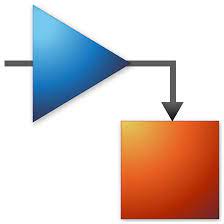
Direct current (DC) motors are widely used in various industrial applications due to their simplicity, reliability, and controllability. However, there is a growing demand for more energy-efficient DC motors to reduce energy consumption and minimize environmental impact. In this project, we propose the design and implementation of a high-efficiency DC motor for industrial applications.
The project will start with a thorough review of existing literature on DC motor design principles and efficiency optimization techniques. Based on this literature review, we will develop a design methodology that focuses on minimizing power losses, improving magnetic efficiency, and optimizing the motor’s mechanical components. Finite element analysis (FEA) simulations will be used to validate the proposed design and optimize key parameters such as coil windings, magnetic flux density, and materials selection.
Once the design is finalized, a prototype of the DC motor will be manufactured and tested in a laboratory setting. The performance of the motor, including efficiency, torque, and speed characteristics, will be measured and compared to existing motors on the market. The prototype will also be tested under different load conditions to evaluate its performance in real-world industrial applications.
The results of this project are expected to contribute to the development of high-efficiency DC motors for industrial applications, with potential benefits in terms of energy savings and environmental sustainability. The proposed design methodology and optimization techniques can also serve as a reference for future research in the field of DC motor design and optimization.
Read more
The team has good experience and expertise of Automobiles be it two wheeler or 4 wheeler. I wish them all …
Read more
D Kishan Rao CEO - Rao Custom Bike & Car
Team IJYA from YMCA university of science and technology has taken the initiative of designing and fabricating a solar electric …
Read more
Pallavi Sharma Captain, IJYA - YMCA university


Why Choose DIY Course
 Course work & interactions are 100% online.
Study at the time and place that suits you.
24/7 access to course material.
Learn from world-class experts in their field.